We stopped asking how to show a slide in 3D.
Mixed-reality presentation and collaboration. Zoom in a headset, effectively. The product got good the moment the question changed.
What it was
Zoom in a headset, and anyone could build the room.
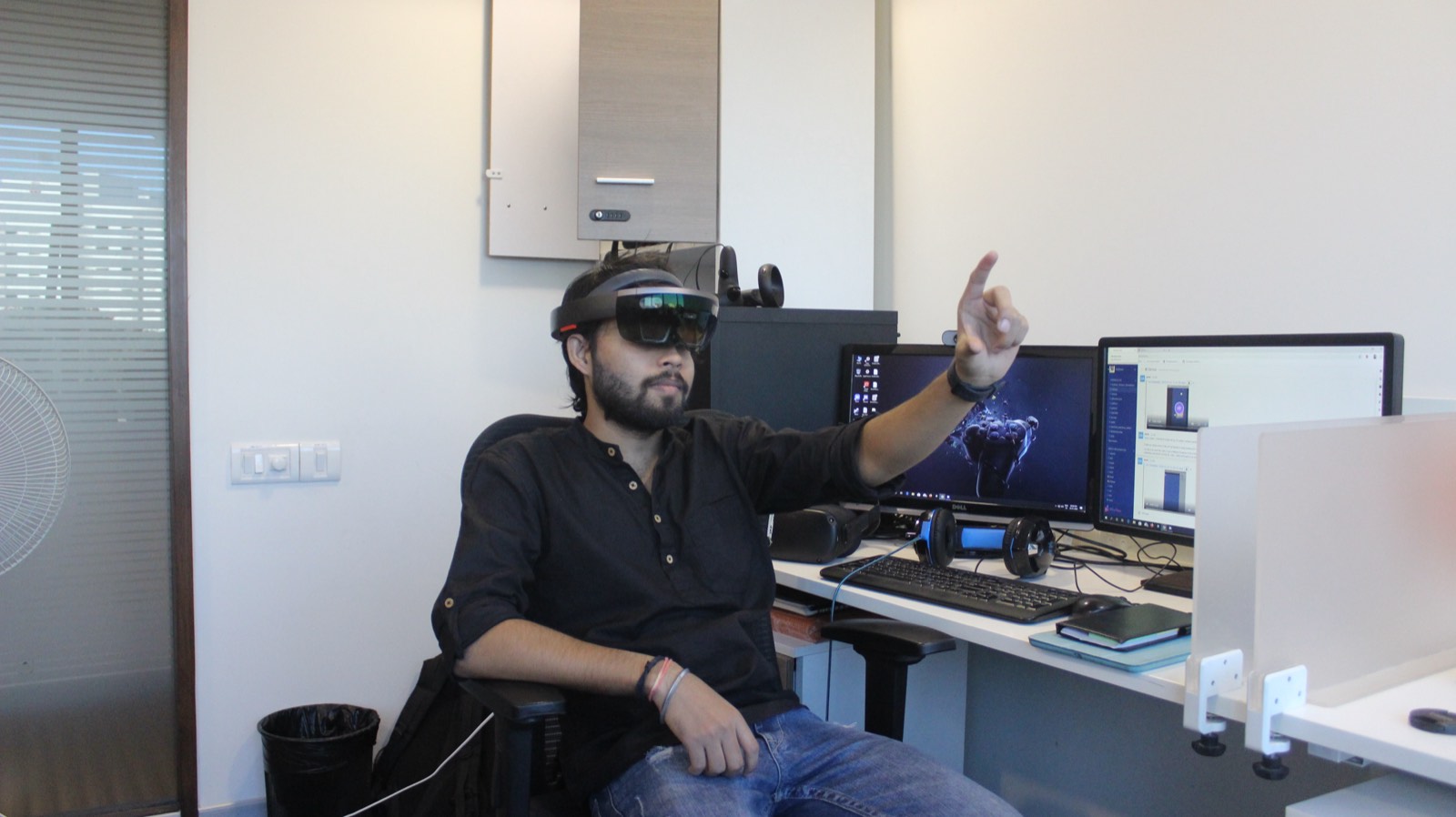
Mixed-reality presentation and collaboration for enterprise. Several people, one shared spatial session. Across headsets and phones. Everyone seeing and moving the same things.
The authoring was no-code. Drag and drop, ready-made 3D assets. Customers built their own scenes instead of commissioning them. In 2019 that was the unusual part. It's the same instinct in everything since.
HoloLens, HoloLens 2, Quest, iOS, Android and Magic Leap. One session, whichever thing you had on your face.
The port
Taking it to Quest wasn't a recompile.
Headset cost was the barrier. A pilot could be justified per seat. A rollout could not. Quest was an order of magnitude cheaper. Moving to it changed four things at once.
And all of it multiplied by multi-user. Shared spatial state across five platforms. Every one of those changes has to stay consistent with the others. Live, in the same room.
The reframe
Porting a metaphor isn't using a medium.
The first instinct with any new display is to bring the old thing into it. A slide, floating. It works. It demos. It isn't worth putting on your head.
The moment the product got good was the moment we stopped asking how to show a slide in 3D and started asking what a physical room can do.
A room has surfaces. Distances. A place to stand. Other people who can see where you're looking. None of that exists in a slide deck. All of it's free the moment you stop reproducing one.
That reframe is what I carried out. Every product since has had a version of it.
What stood behind it
The evidence here is external, and that's the point.
This is early work on somebody else's product. There's no benchmark to show. So credibility comes from elsewhere. Who shipped it. Who bought it. Who wrote about it.
Published on the Microsoft Store. An enterprise MR product that cleared store review and shipped to customers. Most of the category was demos.
Official Microsoft Mixed Reality partner, with a direct line to the HoloLens team. Also part of Oculus Launch Pad.
Fortune 500 and Fortune 50, across healthcare, aeronautics, food, telecoms, entertainment and education, and the names are under NDA and stay that way.
Variety, TechCrunch, Mashable, VentureBeat, VRScout, CNet, UploadVR and NextReality.
Spatial, Engage VR, Mozilla Hubs and AltspaceVR were the competitive set. Most of that list no longer exists, which says something about the category rather than about any one product in it.
The studio shipped headsets, rented them, and ran onboarding as part of the engagement. That's how much of a barrier the hardware was. It's the constraint the Quest port existed to remove.
What isn't on the record
The honest version of early work.
This was 2018 to 2020, written up years later. Several things a case study would normally carry weren't kept. Saying so is more useful than reconstructing them.
I contributed to AN-Prez as a mixed-reality developer over roughly two years, including the work that took it to Quest. Not built. Not led. The product was somebody else's, and the distinction matters more than the sentence it costs.
Two sources state it differently for the same port. Neither records how it was calculated. Reconstructing it from device list prices gets close to one of them. Suggestive, not settled.
So the claim here is that the port collapsed the device-cost barrier. No percentage attached. A number nobody can source is worth less than the sentence it sits in.
Seats, sessions, customers. Fortune 500 clients across several industries is on the record. How much it was actually used isn't.
A multi-user spatial product across five platforms in 2019 had hard ones. Field of view on HoloLens. Session stability with several headsets in a room. The fidelity ceiling on Quest after the port. How well hand-tracked avatars actually read to other people.
Each of those is a real answer that was never captured. Listing the questions is more honest than inventing the answers.
Prez 2.0 was announced in late 2022. More than two years after I left. Nothing on this page describes it. Features from it should never be read backwards into this work.